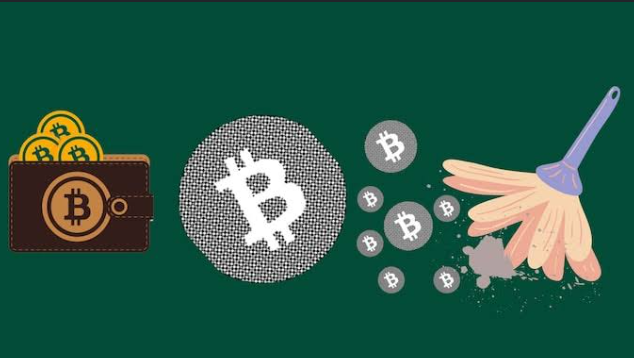
Dusting attacks sprinkle tiny, often undetectable transactions to unlabeled addresses. These traces can be linked to real accounts and routines, gradually mapping asset flows. Privacy erodes as ownership and activity gain exposure. The risks extend to targeted phishing, surveillance, and risk assessment challenges. The implications for users are nuanced and ongoing. Understanding the mechanics and defenses may alter how one manage wallets and disclosures, raising a critical question about how to proceed with caution.
What Dusting Attacks Are and Why They Matter
Dusting attacks involve sending tiny, often unobtrusive crypto transactions to users’ wallets to deanonymize owners or link addresses to real-world activity.
This issue introduces dusting concepts that centralize concern around traceability and who can observe activity.
The discussion highlights privacy implications, urging cautious scrutiny of wallet activity and transaction metadata while maintaining a freedom-oriented stance toward personal financial sovereignty.
See also: Blog Home Ideas Thehometrotters
How Dusting Compromises Privacy in Practice
Dusting attacks reveal practical privacy risks by exploiting small, inconspicuous transactions to map wallet activity and infer ownership. In practice, attackers exploit privacy loopholes to correlate addresses and flows, enabling limited chain surveillance without overt intrusion. This technique highlights vulnerabilities in routine transfers, raising concerns about user autonomy, consent, and the ability to maintain anonymous financial behavior.
Real-World Scenarios and Risks for Crypto Users
Real-world dusting scenarios illustrate how subtle, routine transactions can expose broader patterns of user behavior, asset flows, and ownership. These cases underscore privacy tradeoffs faced by users who seek freedom yet encounter traceable footprints.
While transaction tracing reveals connections, it also risks unintended associations and irreversible disclosures, prompting caution, disciplined disclosure management, and prudent risk assessment in diverse asset ecosystems.
Practical Defenses and Best Practices to Reduce Dusting Exposure
Awareness of privacy pitfalls and addressable risks informs decisions, while cautious routine monitoring prevents accidental disclosure and preserves broader financial autonomy.
Frequently Asked Questions
How Can Dusting Affect Custodial vs. Non-Custodial Wallets Differently?
Dusting can differently impact custodial privacy and noncustodial risk; custodial services may shield users but remain subject to regulatory data requests, while noncustodial holders face direct privacy erosion and higher exposure to tracing, despite personal control and autonomy.
Are There Legal Implications to Receiving Dusting Transactions?
Dusting legality is unsettled; regulators drift in fog, gifting regulatory ambiguity. The practice acts like a sly fingerprint, prompting scrutiny for recipients and networks, yet no universal ban exists, urging cautious compliance while preserving freedom to engage.
Does Dusting Target Specific Cryptocurrencies More Than Others?
Dusting attacks show limited coin specificity, with prevalence varying by network. The answer suggests dusting prevalence is not uniform, and coin specific targeting can occur but remains inconsistently documented, demanding cautious, freedom-minded verification by observers.
Can Dusting Attacks Be Used for Identity Theft or Stalking?
Dusting attacks can enable identity theft or stalking under certain conditions, though rarity and safeguards limit practical impact. This coincidence highlights dusting ethics and privacy risk, prompting cautious scrutiny while preserving individual freedom and informed decision-making.
What Indicators Reliably Distinguish Dusting From Legitimate Network Activity?
Dusting indicators include sudden, unsolicited transactions and unusual address-activity patterns; network anomalies like abrupt traffic bursts or clustering of probes help distinguish them from legitimate activity. The detached assessment emphasizes cautious interpretation and user-empowered privacy awareness.
Conclusion
Dusting attacks pose a subtle yet real privacy risk, linking otherwise anonymous activity to real-world identities through tiny, inconspicuous transactions. The practice can enable pattern analysis, timing correlations, and asset tracing, gradually unraveling ownership across wallets. Users should treat any incoming micro-transaction with scrutiny, avoid revealing labeled addresses, and minimize cross-wallet correlations. Implementing careful privacy hygiene—dust-aware monitoring, disciplined disclosure, and selective interaction—helps preserve financial autonomy. In short, guardrails matter; nip exposure in the bud before it spreads.
